
Introduction
Natural quartzite and engineered quartz are both used for kitchen countertops, vanity tops and other interior surfaces. Although their names are similar, they differ in composition, appearance and maintenance requirements.
Understanding these differences helps homeowners, designers and property developers select a material that suits the project’s aesthetic preferences and practical needs.
What Is Natural Quartzite?
Natural quartzite is a stone formed when quartz-rich sandstone undergoes heat and pressure over geological time. The process produces a hard, recrystallised rock with natural mineral variations.
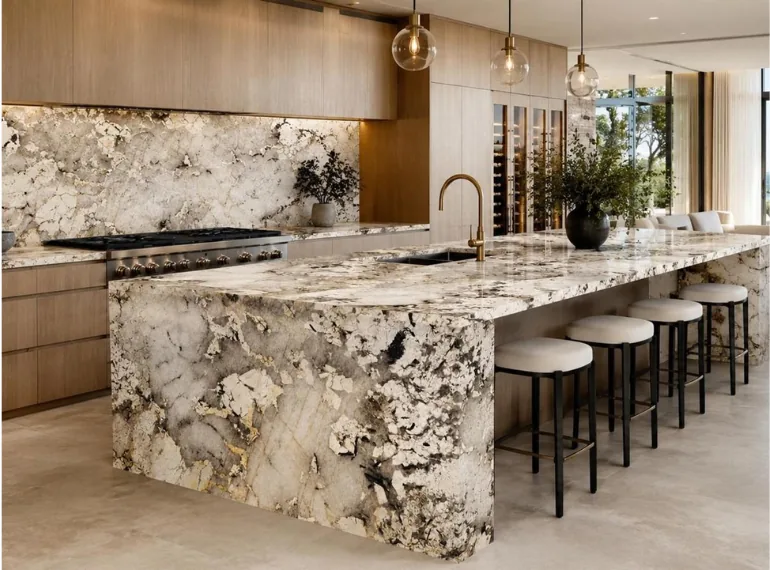
Its appearance can include flowing veins, layered patterns and distinctive colour combinations. Because it is a natural material, each slab has its own pattern and colour distribution.
Quartzite is valued for its hardness, but the properties of individual slabs should be confirmed. Natural stone can vary in porosity, composition and performance, and correct identification is important when purchasing.
What Is Engineered Quartz?
Engineered quartz is a manufactured surface generally made from quartz particles combined with binding resins and pigments, although formulations vary between products.
Manufacturing allows producers to offer a more controlled appearance, with consistent colours and patterns across a product range. This can be useful when several surfaces need to match closely.
However, engineered quartz is not identical to natural quartzite, and its performance characteristics depend on the specific product formulation and manufacturer.
Appearance and Design Flexibility
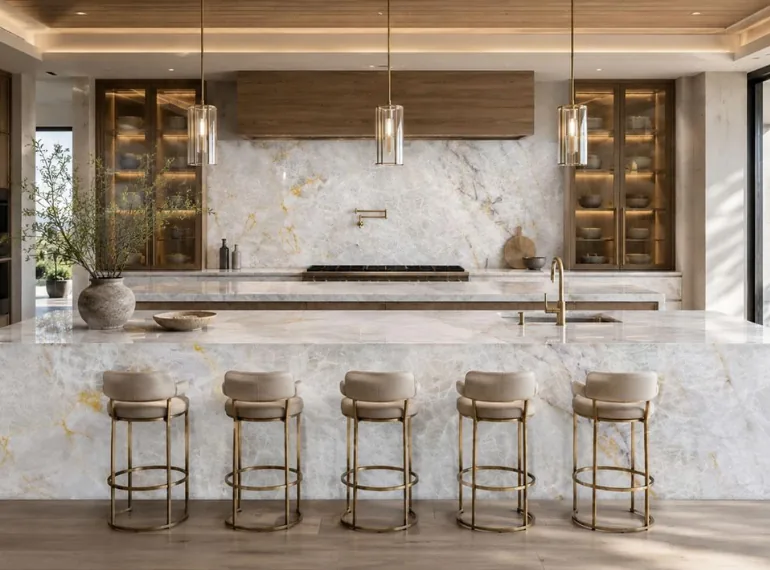
Natural quartzite appeals to those who want geological patterns and natural variation. Dramatic veining can make it suitable for statement kitchen islands, feature surfaces and bespoke installations.
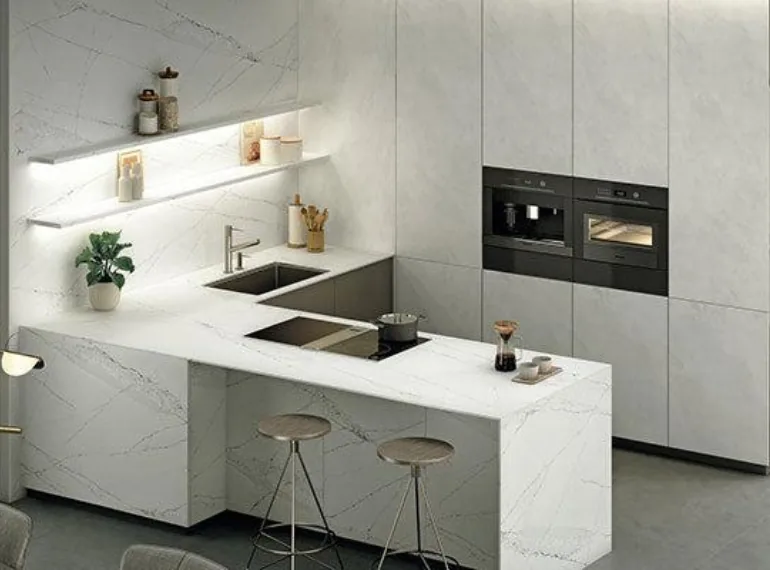
Engineered quartz may be preferred where a consistent colour or repeatable pattern is important. It can complement minimalist interiors and projects that require coordinated surfaces across multiple rooms.
Neither material is automatically the better aesthetic choice. The decision depends on the desired look and the overall design scheme.
Durability and Everyday Use
Natural quartzite is generally valued for its hardness, but the specific slab must be assessed for the intended application. Ask the supplier about staining, sealing, cleaning and heat-related precautions.
Engineered quartz can offer good everyday performance, but its resin content means heat exposure must be managed according to the manufacturer’s instructions. Sudden or direct heat may damage some products.
For both materials, suitable installation, appropriate support and proper care are essential.
Maintenance Requirements
Natural quartzite may require sealing depending on the variety and its absorption characteristics. Sealing can help reduce staining but does not make the surface completely stain-proof.
Engineered quartz often has different maintenance requirements depending on the product. Follow the manufacturer’s cleaning instructions and avoid unsuitable chemicals or abrasive methods.
Always request product-specific guidance rather than relying on general claims about either category.
Cost, Fabrication and Installation
The final cost of either material depends on slab selection, dimensions, thickness, edge profiles, cut-outs, transport and installation. Natural stone with distinctive patterns may require additional planning to achieve the desired layout.
Engineered quartz may offer more predictable colour matching, but fabrication requirements still vary by product. A qualified fabricator should confirm the suitability of the material for the design.
Which Material Should You Choose?
Natural quartzite may suit projects where unique veining and natural variation are priorities. Engineered quartz may be appropriate when consistent patterns and a controlled colour palette are more important.
Before deciding, compare actual samples or slabs, review maintenance requirements and discuss the intended application with a qualified supplier.
The best choice is the material that meets the project’s design goals, practical requirements and long-term care expectations.