
Introduction
Natural veining is one of the most recognisable characteristics of exotic quartzite. Its flowing lines, contrasting bands and mineral details create patterns that vary from slab to slab.
These patterns reflect the stone’s geological history and mineral composition. They also influence how the material is used in interior design, particularly where large surfaces allow the natural movement to remain visible.
How Natural Patterns Form
Quartzite forms when quartz-rich sandstone is transformed by heat and pressure over geological time. During this process, the rock recrystallises, and variations in minerals and geological conditions contribute to its final appearance.
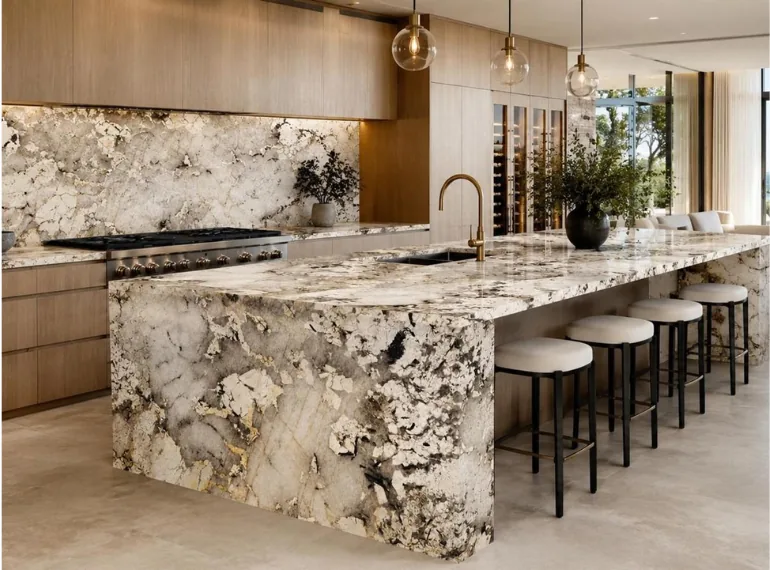
Different quartzite varieties display different combinations of colour, texture and veining. Some have fine, subtle lines, while others feature bold patterns and contrasting tones.
These variations give natural quartzite its distinctive character and make slab selection an important part of the design process.
Veining as a Design Feature
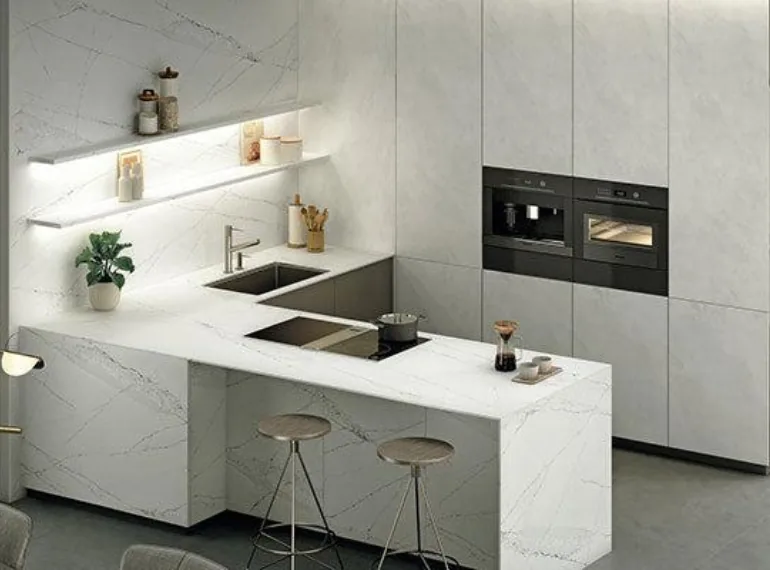
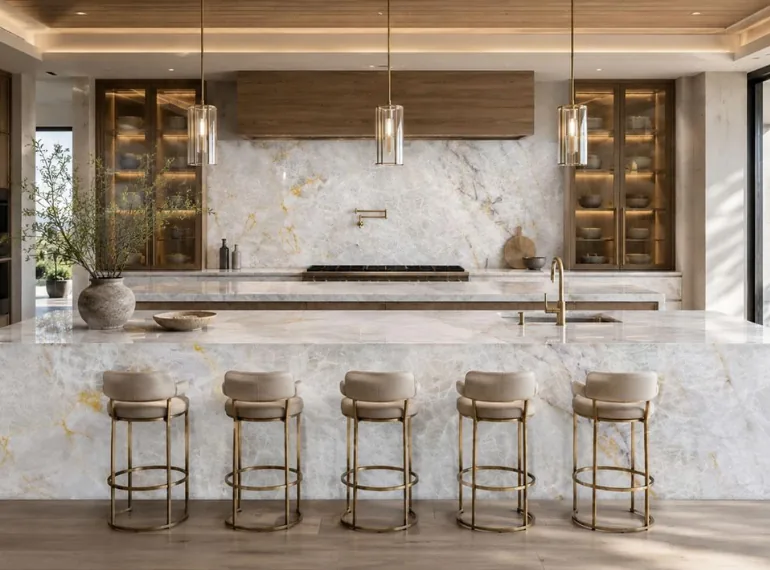
The pattern of a slab can influence how a room feels. Flowing veins may create movement across a long kitchen island, while a concentrated pattern can draw attention to a smaller feature.
On a feature wall, the orientation of the veins can influence the perceived height and width of the surface. On a countertop, the pattern may guide where joints and cut-outs are placed.
The fabricator should review the slab before cutting to identify the most effective layout.
Understanding Bookmatching
Bookmatching involves placing suitable slabs next to one another so that their patterns form a mirrored composition. It can create a striking effect on feature walls, selected islands and other large installations.
The result depends on the natural pattern and the way the material is cut. Not all slabs are suitable for bookmatching, so the design should be confirmed after reviewing the available material.
Combining Veining with Other Materials
Highly patterned quartzite often works well with understated finishes. Neutral cabinetry, natural wood and simple metal fittings can allow the stone’s natural movement to remain the focus.
Lighting also affects how the pattern appears. Directional lighting can highlight mineral details, while softer ambient lighting may produce a more subtle result.
Inspecting the Full Slab
Small samples cannot show the complete pattern of a large slab. Viewing the full material helps identify colour distribution, veining and areas that may be prominent after fabrication.
If multiple slabs are needed, ask how they will be positioned and whether their patterns can be coordinated.
A Natural Feature for Individual Interiors
The beauty of exotic quartzite lies in its combination of geological variation and design potential. Its veining can serve as a focal point or provide subtle texture, depending on the chosen variety and application.
With careful selection and fabrication, natural quartzite can bring individuality and visual depth to contemporary luxury interiors.