
Introduction
Marble is valued for its natural veining, subtle colour variations and distinctive surface character. Yet the way marble looks in a finished room depends heavily on lighting. A slab that appears bright and understated in daylight may look warmer, darker or more dramatic under artificial illumination.
Understanding this relationship helps homeowners and designers select suitable stone and plan lighting that enhances the material’s natural qualities.
The Effect of Natural Daylight
Daylight reveals different details in marble throughout the day. Morning light, afternoon sunlight and indirect daylight can change how the stone’s colour and veining appear.
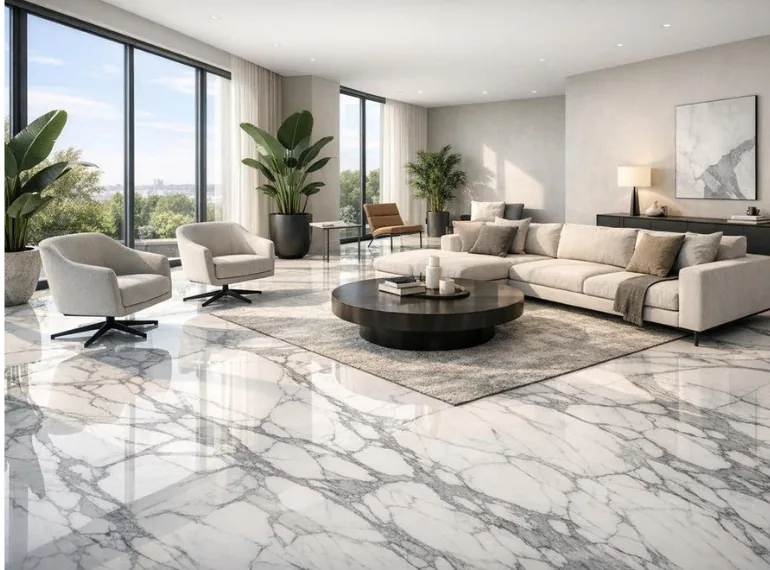
Large windows and open-plan layouts can make marble flooring and wall cladding feel bright and spacious. Light-coloured marble may reflect available light, helping create an airy atmosphere. However, the room’s orientation, window size and surrounding surfaces influence the result.
In UAE homes, where sunlight can be intense, window treatments and the placement of decorative surfaces should be considered during planning. Direct sunlight can also affect certain finishes and materials over time, so the specific stone and installation conditions should be assessed.
Warm and Cool Artificial Lighting
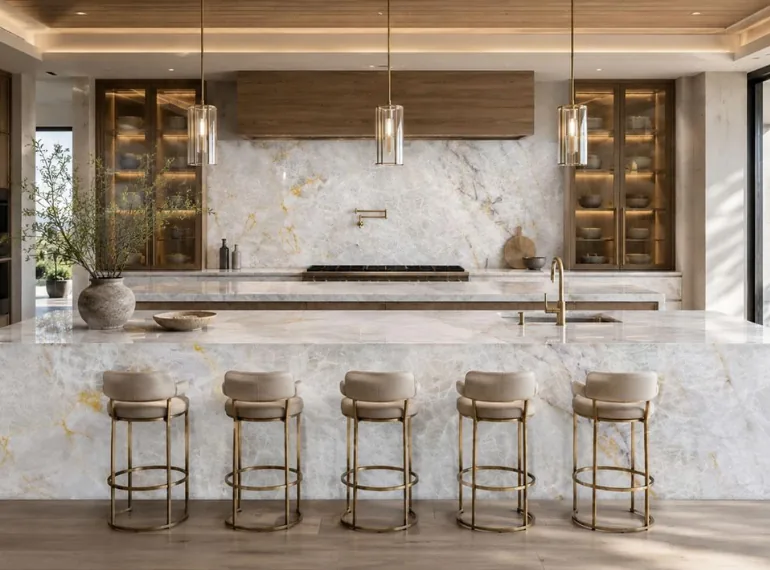
Artificial lighting can create different moods. Warm lighting generally complements cream, beige and gold-toned marble, producing a comfortable and inviting atmosphere. Neutral lighting may help preserve a more balanced appearance, while cooler lighting can emphasise grey and white tones.
The best choice depends on the intended design. A formal living room may benefit from warm ambient lighting, while a contemporary bathroom might use carefully selected neutral lighting around the vanity.
Whenever possible, test lighting samples with the actual marble. This helps identify unwanted colour shifts before installation.
Lighting Marble Feature Walls
Feature walls can benefit from directional lighting that highlights the stone’s pattern. Wall washers distribute light across a broader surface, while spotlights can emphasise selected areas.
Bookmatched marble installations are particularly effective when lighting reveals the symmetry of the veins. However, strong directional lighting can also exaggerate surface irregularities or create unwanted glare, depending on the finish and angle.
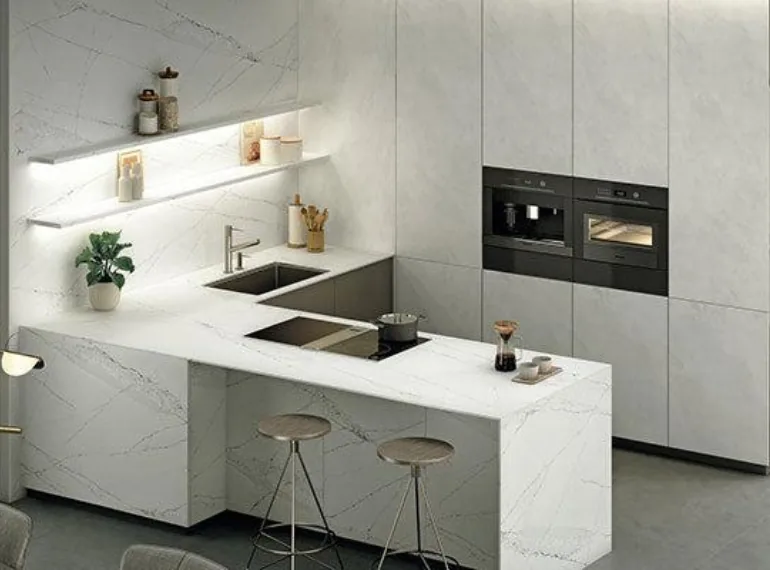
Concealed lighting can create a subtle architectural effect around niches and selected wall details. Electrical planning should be completed before the stone is installed.
How Finishes Influence Reflection
Polished marble reflects more light and can make a room feel brighter. Its glossy appearance can also emphasise dramatic patterns.
Honed marble has a softer, less reflective finish, making it suitable for interiors that favour understated elegance. Textured finishes create a different visual character through changes in light and shadow.
The finish should be selected according to the intended application, cleaning requirements and safety considerations.
Coordinating Stone and Lighting
Marble works well with timber, glass, metal and neutral wall finishes. The right lighting can bring these materials together, creating visual depth without overwhelming the space.
Before finalising a design, assess the stone at different times of day and under the proposed artificial lighting. Consider brightness, glare, colour temperature and the location of fittings.
With thoughtful coordination, lighting can enhance marble’s natural beauty and create interiors that feel balanced, sophisticated and welcoming.